

You need the right tube for every skincare formula. Four filters guide your choice: formula compatibility, barrier needs, user experience, and brand identity. A wrong match causes leaks, formula degradation, or a costly reorder. This guide helps you narrow hundreds of Custom Cosmetic Squeeze Tubes down to one.
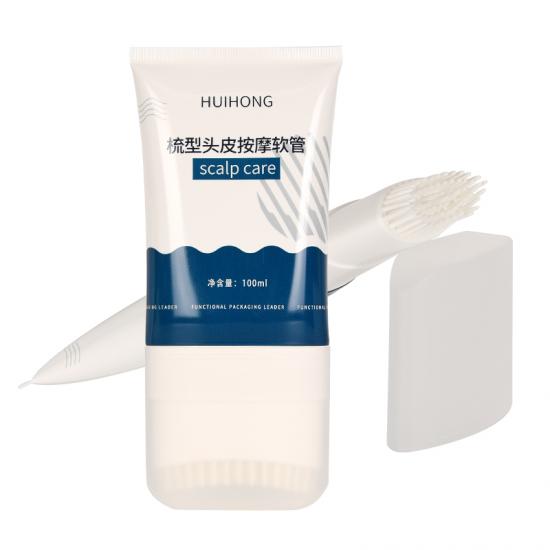
Your formula dictates everything about your tube choice. Before you browse catalogs or request samples, you need to understand how your product behaves. Viscosity, ingredient sensitivity, and pH all influence which tube will protect your formula and deliver it properly. Skipping this step leads to leaks, degraded actives, or frustrated customers.
Viscosity determines how your product flows, dispenses, and settles inside the tube. A thin serum behaves nothing like a thick clay mask. You need a tube that works with your formula's natural flow characteristics.
Thin, liquid-like serums require slightly more rigid MDPE or PBL tubes. These materials prevent accidental leakage from gentle pressure. They also allow controlled, drop-by-drop dispensing. Avoid very soft LDPE for watery formulas because the tube may dispense too quickly.
Thick, paste-like clay masks need soft, highly flexible LDPE tubes. An ABL tube works even better. Rigid HDPE would require excessive force and make it nearly impossible to extract the last 20–30% of product. ABL's dead-fold property lets users roll the tube to extract everything.
The table below shows how tube construction affects dispensing and barrier protection.
| Tube Type | Squeeze-ability / Dispensing | Best Suited For (Viscosity) | Barrier Protection |
|---|---|---|---|
| Single-Layer | Excellent squeeze-ability | Low-viscosity products (e.g., shampoos, conditioners) | Less critical |
| Double-Layer | Controlled dispensing | Medium-viscosity products (e.g., creams, lotions) | Increased barrier properties, improved durability |
| Five-Layer | Premium protection | Sensitive/premium formulas (e.g., serums, sunscreens) | Superior barrier against oxygen, moisture, and light |
For high-viscosity creams and ointments, you need specific tube features. LDPE or aluminum laminate works best. Choose an 8 mm to 12 mm orifice for ointments. An 8 mm orifice suits thicker creams such as body butters and barrier creams. A screw cap or child-resistant screw cap provides secure closure. Avoid HDPE because it is too rigid and hard to squeeze. Clear plastics do not work for light-sensitive APIs. Watch for plasticizer migration from oil contact in oil-based or anhydrous formulas.
Laminated tubes handle a specific viscosity range. Standard squeeze tubes work well with formulas between 10,000 and 40,000 cP. Wide-neck tubes accommodate 30,000 to 80,000 cP. General squeeze tubes, including laminated options, cover 10,000 to 50,000 cP.
| Formula Viscosity | Recommended Tube Material | Rationale |
|---|---|---|
| Thin, liquid-like serum (low viscosity) | Slightly more rigid MDPE or PBL tube | Prevents accidental leakage from gentle pressure; allows controlled, drop-by-drop dispensing |
| Thick, paste-like clay mask (high viscosity) | Soft, highly flexible LDPE tube; even better, an ABL tube | Rigid HDPE would require excessive force and make it nearly impossible to extract the last 20–30% of product; ABL's dead-fold lets users roll the tube to extract everything |
| Thin, watery serum | Avoid very soft LDPE | May dispense too quickly |
| Thick, dense balm | Avoid rigid HDPE | Could be frustrating for the consumer to use |
Some ingredients react with packaging materials. Essential oils, retinol, vitamin C, and salicylic acid are common culprits. You need to verify that your tube material will not interact with these sensitive components.
Essential oils present particular challenges. Small volatile molecules like terpenes and limonene easily penetrate the plastic matrix. This causes fragrance loss and aroma change. These molecules have a low-polarity affinity for PE and LDPE. The essential oil molecules get absorbed by the polyolefin layers. This leads to scalping, softening, and swelling of the tube wall. A high essential-oil percentage increases absorption and migration risk. Long storage time makes diffusion and absorption worse. Heat accelerates molecular diffusion and polymer interaction. Citrus and terpene-rich oils are especially prone to penetrating polyolefin layers.
| Factor | Chemical Interaction Description |
|---|---|
| Small volatile molecules (e.g., terpenes, limonene) | Easily penetrate the plastic matrix, causing fragrance loss and aroma change. |
| Low‑polarity affinity for PE/LDPE | Essential oil molecules are absorbed by the polyolefin layers, leading to scalping, softening, and swelling of the tube wall. |
| High essential‑oil percentage | More volatile material contacts the inner wall, increasing absorption and migration risk. |
| Long storage time | Diffusion and absorption increase over time, causing gradual scent and formula drift. |
| High temperature | Heat accelerates molecular diffusion and polymer interaction, resulting in faster scalping and compatibility failure. |
| Citrus and terpene‑rich oils (e.g., limonene) | Small, non‑polar molecules are especially prone to penetrating polyolefin layers, making them high‑risk for migration and scalping. |
Polyethylene tubes offer good chemical stability for many cosmetic substances. They resist alcohol-based cleansers and oil-rich moisturizers. Their ability to maintain freshness and prevent leakage ensures a higher product shelf life. Customization options in PE materials enable brands to adapt packaging layers to accommodate challenging formulas, such as retinol or salicylic acid blends.
PE tubes are chemically stable and resistant to many cosmetic substances, from alcohol-based cleansers to oil-rich moisturizers. Their ability to maintain freshness and prevent leakage ensures a higher product shelf life. Furthermore, customization options in PE materials enable brands to adapt packaging layers to accommodate challenging formulas, such as retinol or salicylic acid blends.
Different barrier materials solve different degradation problems. Polyethylene provides good moisture barriers but has limited oxygen protection. EVOH layers offer excellent oxygen barrier properties, which is critical for preserving antioxidants and vitamins. Aluminum-plastic laminates deliver superior protection against light, oxygen, and moisture for sensitive ingredients. Single-layer tubes may be sufficient for simple formulations. Multi-layer constructions with EVOH are better for sophisticated serums.
| Degradation Issue | Cause | Impact on Formula |
|---|---|---|
| Oxidation | Oxygen exposure | Active compounds such as vitamin C and retinol break down, losing efficacy and potentially causing spoilage or discoloration |
| Moisture ingress | Water/moisture entering the tube | Destabilizes emulsions, alters texture, and promotes microbial growth, especially in water-based or low-preservative formulas |
| Light (UV) degradation | Exposure to light, particularly UV rays | Breaks down light-sensitive molecules and reduces product efficacy |
| Contamination | Bacteria or airborne particles entering after opening | Compromises product hygiene and user safety during dispensing |
Your formula's pH affects packaging compatibility. Acidic formulas below pH 4 can corrode certain metals and interact with some plastic additives. Alkaline formulas above pH 8 may soften or degrade specific tube materials. You need to confirm that your chosen tube can handle your formula's pH range throughout its shelf life.
Preservative systems also interact with packaging. Some preservatives absorb into plastic walls, reducing their effective concentration in the formula. This leaves your product vulnerable to microbial growth. Formulas with low preservative levels need tubes that minimize absorption. Multi-layer tubes with inner barrier layers often solve this problem.
Consider how your preservative system works with your tube's material. Water-based formulas with low preservative concentrations are especially vulnerable to moisture ingress and contamination. You need a tube that provides an effective barrier against outside moisture and airborne particles.
Testing your formula in your chosen tube is essential. You cannot predict every interaction from material data sheets alone. Real-world stability testing reveals how your specific formula behaves over time. This step protects your brand from costly reformulation and reprint expenses later.
When you evaluate Custom Cosmetic Squeeze Tubes for your product, start with these formula considerations. Your viscosity, sensitive ingredients, pH, and preservative system all point toward specific tube materials and constructions. Get this foundation right before you move on to material selection and customization options.
After you confirm your formula's viscosity, ingredient sensitivity, and pH, you move to the material selection stage. Each tube material serves a specific purpose. Some handle daily creams with ease. Others shield fragile actives from oxygen and light. The right choice depends on the balance of barrier performance, user convenience, and sustainability your product demands.
PE squeeze tubes are the workhorses of the skincare industry. You see them everywhere — hand creams, facial cleansers, body lotions, massage oils, and lip balms. Their flexible design gives you smooth dispensing and reduces product waste. Users can squeeze out nearly every drop. Their lightweight construction also cuts down your shipping costs.
Standard PE tubes offer adequate barrier protection for most everyday formulas. They resist alcohol-based cleansers and oil-rich moisturizers well. For products like daily lotions and gel cleansers, a single-layer or double-layer PE tube works fine. You get cost efficiency without sacrificing performance.
But what if your formula needs better protection against oxygen? That is when you turn to co-extruded (coex) tubes. These tubes use multiple layers bonded together during extrusion. An EVOH (ethylene vinyl alcohol) layer inside the structure blocks oxygen effectively. The oxygen transmission rate for a coex tube with EVOH drops below 1.0 cc/m²/day — a dramatic improvement over single-layer HDPE (80–120) or LDPE (120–200). This level of protection keeps antioxidants fresh and delays rancidity in oil-based formulas.
| Attribute | PE Tubes | PP Tubes | Multi-layer Laminates |
|---|---|---|---|
| Flexibility and dispensing | Soft and flexible, easy to squeeze | Noticeably stiffer, suited to luxury products | N/A |
| Cost | Budget-friendly | Usually more expensive | N/A |
| Production sealing | Forgiving during sealing, fewer issues | N/A | N/A |
| Barrier protection | Adequate for most creams and gels | Better barrier for sensitive actives | Best barrier for oxygen-sensitive formulas |
| Recyclability | Widely accepted, growing PCR options | Recyclable but less widely collected | Trickier to recycle; mono-material options improving |
| Best use case | Everyday moisturizers, hand creams, body lotions | Luxury serums, high-res printing | Antioxidants, sunscreens needing extra protection |
Sustainability also matters more every year. PE tubes align well with current trends. Mono-material PE construction improves recyclability because it keeps the tube in a single plastic stream. Many suppliers now offer PCR (post-consumer recycled) content. You can also find sugarcane-derived polyethylene as a renewable alternative. These options help you meet brand sustainability goals without sacrificing tube performance.
Some formulas demand more than standard PE or coex tubes provide. If your product contains antioxidants, retinol, or high levels of essential oils, you need a laminated tube. These tubes bond multiple material layers — plastic film, barrier layers, and sometimes aluminum foil — into one structure. The result is superior protection against oxygen, moisture, and light.
Two main laminated tube types exist: ABL (Aluminum Barrier Laminate) and PBL (Plastic Barrier Laminate). Your choice depends on the sensitivity of your formula.
| Feature | ABL (Aluminum Barrier Laminate) | PBL (Plastic Barrier Laminate) |
|---|---|---|
| Oxygen barrier | Blocks over 99% of oxygen | Very good (EVOH) but slightly less than ABL |
| Light protection | Superior due to aluminum foil | Moderate — EVOH offers less UV defense |
| Chemical resistance | High — suitable for aggressive formulas | Moderate — better for less aggressive products |
| Water vapor barrier | Strong with low WVTR values | Good but higher WVTR compared to ABL |
ABL tubes provide the highest level of protection. They approach the barrier performance of solid aluminum tubes. The oxygen transmission rate for ABL is below 0.1 cc/m²/day — nearly complete isolation. This makes them ideal for formulas with volatile essential oils, light-sensitive vitamin C derivatives, or strong preservative systems that could degrade.
However, ABL tubes come with a sustainability trade-off. The bonded aluminum foil prevents the tube from being sorted in standard recycling streams. Industry guidance from the Association of Plastic Recyclers confirms that ABL laminates cannot satisfy single-stream recycling requirements. If recyclability is a priority, PBL tubes offer a better compromise. With an EVOH barrier layer, PBL tubes can achieve RecyClass certification as long as foreign materials stay below 5% of tube weight. You get good oxygen protection (OTR 1–5 cc/m²/day) with a much cleaner recyclability profile.
For the most sensitive formulas, even a laminated tube may not be enough. Active ingredients like vitamin C, retinol, and certain peptides degrade rapidly when exposed to air. Each time a user opens a standard tube, oxygen enters the headspace and begins oxidizing the formula. Over weeks of use, the product loses potency. The solution is an airless tube.
Airless tubes operate on a vacuum-sealed principle. Here is how the mechanism works:
The proven benefits for active ingredients are clear. Vitamin C serums are especially vulnerable to oxidation. An airless tube keeps the formula stable from the first use to the last drop. No air contact means no oxidation of ascorbic acid, no discoloration, and no loss of efficacy.
| Proven Benefit | Supporting Evidence |
|---|---|
| Prevents oxidation of vitamin C | Airless tubes keep air out completely; no air means no oxidation of active ingredients like vitamin C |
| Protects vulnerable serums from damage | The airtight seal also prevents evaporation of key ingredients |
| Maintains stability for longer periods | The vacuum system keeps compounds stable, so the serum does not lose its punch halfway through the bottle |
Airless tubes suit formulations with high concentrations of active ingredients. You find them paired with anti-aging serums, brightening treatments, and peptide creams. The packaging ensures that every dose the user dispenses matches the potency you intended.
| Tube Type | Barrier Material | Recyclability Implication |
|---|---|---|
| ABL (Aluminum Barrier Laminate) | Aluminum foil | Aluminum prevents sorting in standard recycling streams |
| PBL (Plastic Barrier Laminate) | Multiple plastic layers (e.g., EVOH) | Substantially improved recyclability; can achieve RecyClass if foreign material <5% |
| Extruded laminated tubes | Plastic outer layer with EVOH or aluminum laminate | Recyclability depends on barrier composition |
When you evaluate options for your next product, think about each Custom Cosmetic Squeeze Tubes category in sequence. Start with coex PE for everyday formulas with moderate protection needs. Move to laminated tubes for premium formulas that require high barrier against oxygen and light. Reserve airless tubes for your most fragile active ingredients. This layered approach ensures you never over-specify or under-specify the packaging for your formula.
Your tube size must match how much product a user applies per use. A 50 ml face cream tube works well when the typical dose is small. Industry guidance confirms this standard.
The amount of face cream used at one time should be around 0.5g. Amount: An almond-sized amount.
A tube holding 50 ml delivers roughly 100 uses at this dosage. This calculation helps you choose a size that lasts through your intended shelf life without waste.
Closure design affects daily user experience. The right cap prevents leaks and dispenses the correct amount.
| Ergonomic Feature | Usability Benefit |
|---|---|
| Flip-top caps | Open quickly with one hand |
| Disc top closures | Provide controlled dispensing with minimal effort |
| Screw caps and flip caps | Support different user preferences |
| Secure closures | Help prevent leaks during storage and transportation |
Testing confirms your formula works with your chosen Custom Cosmetic Squeeze Tubes. Follow this protocol.
Recheck your choice against the four filters: formula, barrier, experience, and brand. Confirm test results before you approve final tooling and order quantity. Lock in your Custom Cosmetic Squeeze Tubes spec early to avoid reformulation and reprint costs later.
Select an airless tube. It blocks all oxygen contact. Your vitamin C stays potent from the first dose to the last drop.
No, you cannot. Match tube material to viscosity. Thin serums need rigid MDPE. Thick creams require flexible LDPE or ABL tubes.
Run compatibility and stability tests. Fill tubes with your formula. Store them at ambient and accelerated conditions for three to six months.
 Soporta red IPv6


 Servicio en línea
Escanear a Wechat :

 español
 English
 français
 русский
 português
 العربية
 日本語
日本語 한국의
한국의 ไทย
ไทย Tiếng Việt